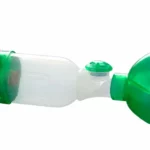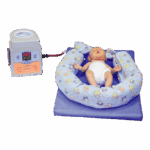
Neonatal Resuscitation System – Baby Start Infant T-Piece Resuscitator with Modular Trolley
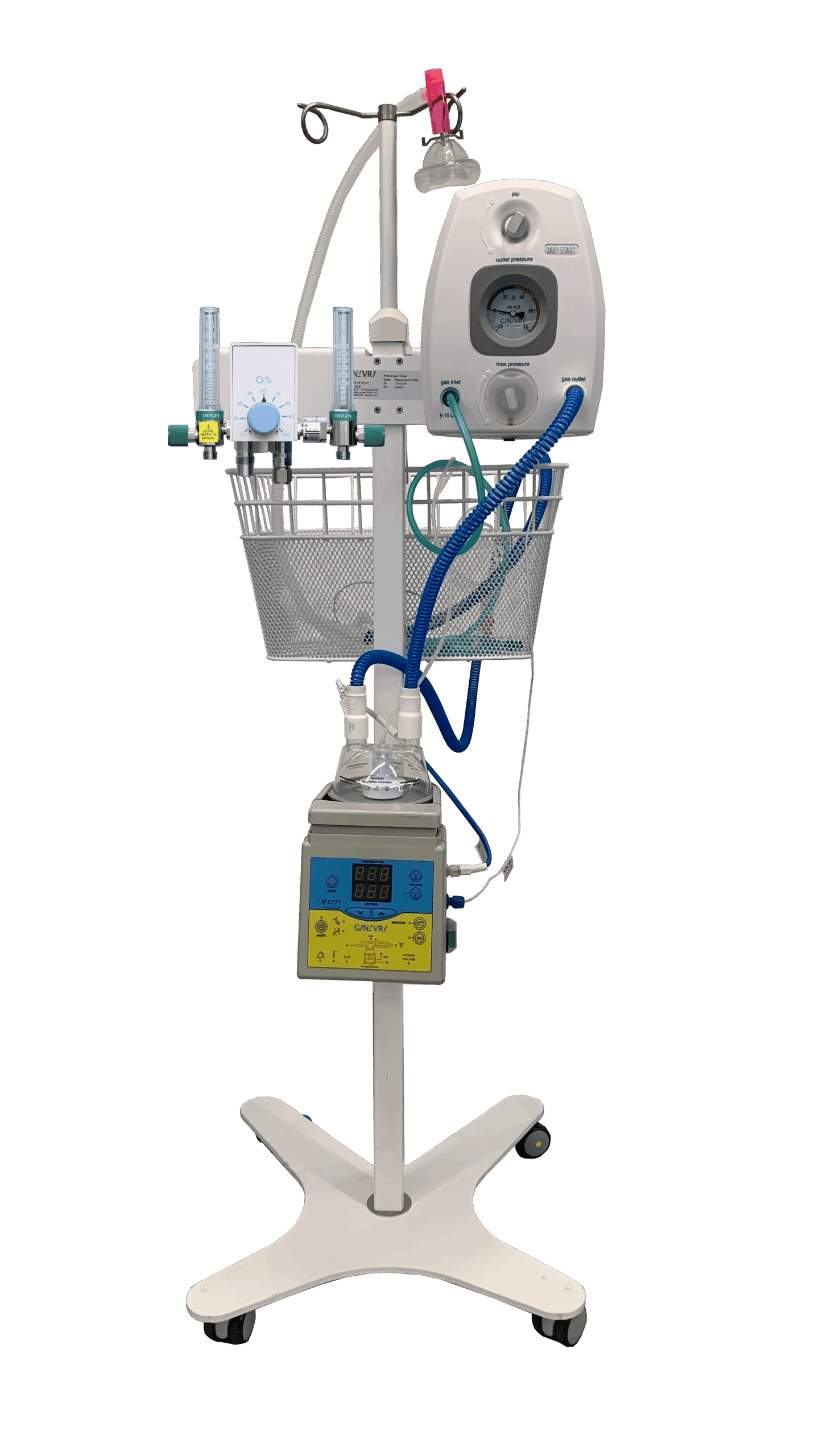
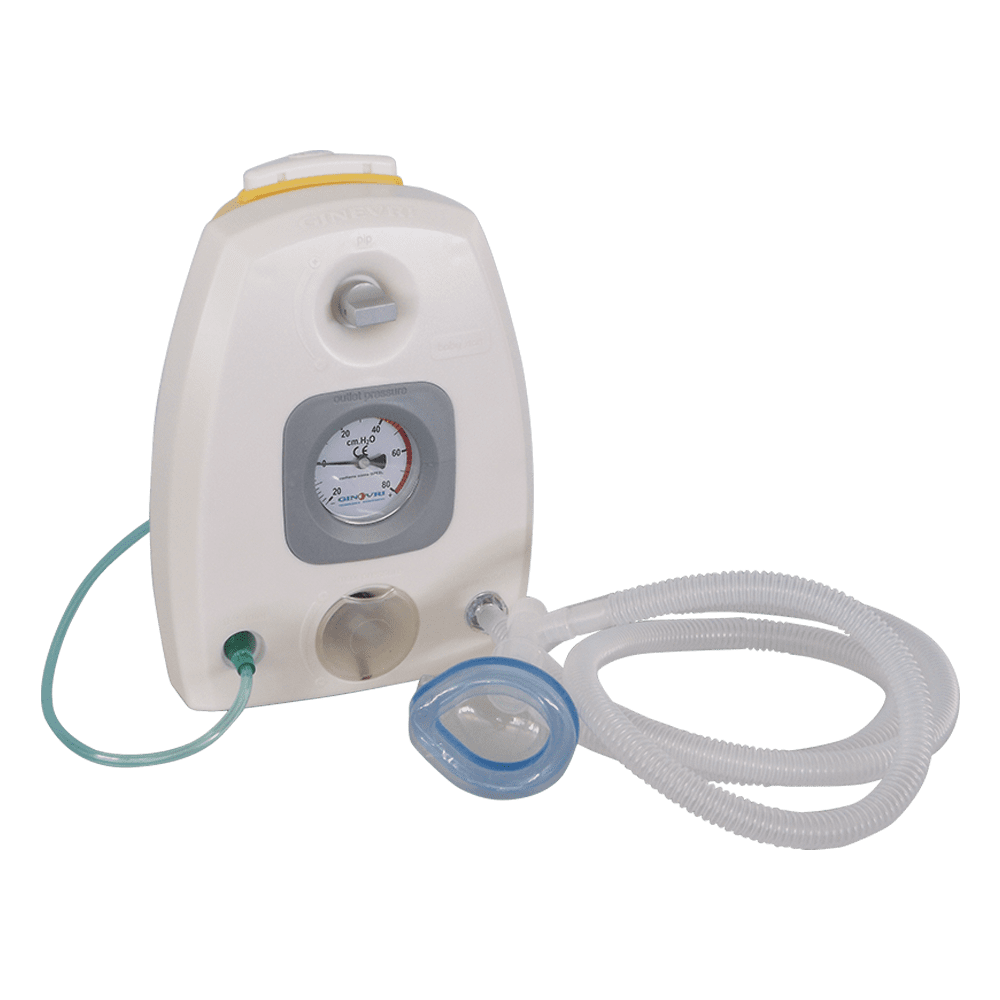
Technical characteristics: Baby Start portable manual infant T-Piece resuscitator Ginevri (Italy), CE certified, 2015 American Heart Association guidelines compliance standards. System delivers precise Positive Inspiratory Pressure (PIP) and Positive End-Expiratory Pressure (PEEP) via an adjustable valve mechanism that establishes Functional Residual Capacity (FRC), optimising neonatal lung volume. Operated by an external gas blender source (Air/O2), delivering constant breathing patterns independent of operator experience/training/manual effort variability. Two configurations: heated circuit for humidified gas application (100% compatible with Wetty GINEVRI humidifiers) and non-heated circuit. Optional timer module activates Sustained Inflation Therapy (SIT) acoustic guidance (5, 10, 15-second intervals). Modular resuscitation trolley with multipurpose bracket for portable mounting and integration into multiple clinical sites, mobile base with lockable castors, integrated accessory storage compartments, ergonomic design facilitating resuscitation teamwork.
| Features | Details |
| PIP Delivery | Fixed target pressure adjustable valve |
| PEEP control | End-expiratory pressure regulation |
| Operation | Manual T-piece only external gas source |
| Interfaces | Multiple sizes of resuscitation masks or endotracheal tube |
| Sustained inflation | Optional acoustic guidance timer (5, 10, 15 seconds) |
| Circuit Options | Heated humidified or unheated |
| Trolley | Mobile multipurpose bracket with locking castors |
| Deployment | Delivery rooms, postnatal wards, operating theatres, intensive care units |
Target patients: Newborns requiring resuscitation in the delivery room, neonatal asphyxia, premature infants with respiratory depression, full-term newborns with breathing problems, newborns in transition from foetal circulation requiring initial ventilatory support, neonatal specialised/intensive care units.
Clinical applications: Emergency resuscitation in the delivery room, immediate postnatal care, management of neonatal asphyxia, prevention of neurological injury, respiratory depression/apnoea support, positive pressure ventilation via mask/endotracheal tube, sustained inflation therapy, rapid pulmonary recruit , controlled ventilation in specialised nurseries, bridge-toward-advanced ventilation strategy, neonatal resuscitation simulation training, mobile resuscitation across multiple sites (delivery, postnatal, operating theatres).
Specific features: Precise PIP delivery with adjustable valve ensuring consistent ventilation regardless of operator effort. Adjustable PEEP regulation optimising FRC and preventing atelectasis. Simple T-piece operation with no electricity required and external gas source. Versatile interfaces for multiple resuscitation masks or endotracheal tubes. Heated circuit option with humidified gas maintains temperature gradients, preventing hypothermia. Multipurpose trolley bracket integration allows installation on various surfaces, mobile base with full locking castors for transport between rooms. Variety of resuscitation masks in multiple sizes ensures optimal fit for the neonatal population. Sustained Inflation Therapy timer guides procedure consistency.
Patient benefits: Precise target pressure ventilation reduces barotrauma/volutrauma complications. Rapid lung recruitment via sustained inflation prevents intubation delays. Core temperature maintained with heated circuit option. Guideline-adherent resuscitation improves neurological outcomes. Smooth transition to advanced ventilation when required.
Clinician benefits: Simple operation with no technical training or electricity required. Reproducible ventilation independent of operator experience. Portable bedside deployment for critical first minutes of resuscitation. Intuitive T-Piece mechanism reducing learning curve. Flexible mask/tube access adapting to real-time clinical needs. Timer-guided sustained inflation improves procedural consistency. Modular trolley design reduces setup time for critical emergency resuscitation.