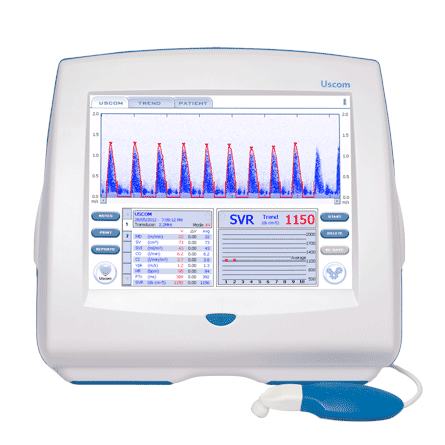
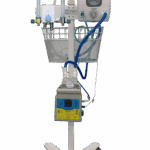
The USCOM 1A is a non-invasive transcutaneous Doppler ultrasound device (2.2 MHz divergent beam transducer) that provides real-time, beat-to-beat measurements of 20+ hemodynamic parameters including cardiac output, stroke volume, SVR, and cardiac power across aortic or pulmonary valves.
Technical characteristics: Portable 6 kg device with intuitive touch screen and storage capacity for tens of thousands of patient records. Continuous 2.2 MHz Doppler ultrasound with proprietary divergent beam technology. Real-time beat-to-beat measurements of 20 cardiovascular parameters.
| Measured parameters |
Applications |
| Stroke Volume (SV) |
Ejection volume per systole |
| Cardiac Output (CO) |
Cardiac output |
| Stroke Volume Variation (SVV) |
Ejection volume variability |
| Systemic Vascular Resistance (SVR) |
Systemic vascular resistance |
| Cardiac Index |
Cardiac Index |
| Oxygen Delivery (DO₂) |
Oxygen Transport |
| Flow Time Corrected (FTc) |
Flow Time Corrected |
Target patients: Neonates from 26 weeks of amenorrhea to adults aged 110 years. Critical care, paediatric, emergency, perioperative, maternal-foetal, oncology (cardiotoxicity) patients.
Clinical applications: Volume optimisation and fluid management, differentiation between sepsis and cardiogenic shock, cardiac function assessment, heart failure monitoring, hypertension management, pre-eclampsia assessment, emergency triage.
Specific features: Proprietary USCOM Reporter software with trend analysis and customisable parametric displays. Non-invasive, eliminating the risk of infection. Bedside and ward-to-ward portability. No expensive consumables.
Patient benefits: Rapid assessment enabling early intervention in sepsis/shock, personalised volume optimisation reducing morbidity and mortality, improved clinical outcomes.
Clinician benefits: Excellent reproducibility with a short learning curve, reduced risks associated with non-invasiveness, portability facilitating bedside use, reduced consumable costs. Demonstrated reduction in septic shock mortality from 19% to 10.2%.